Transforming Telecom Supply Chains through Intelligent Asset Management Solutions

Transforming Telecom Supply Chains through Intelligent Asset Management Solutions

The telecommunications industry is entering a new phase of operational complexity as demand for high-speed connectivity, data-intensive applications, and digital ecosystems continues to accelerate. The rapid rollout of 5G networks, alongside investments in fiber infrastructure and edge computing, has significantly expanded the scale and distribution of telecom assets.  For telecom operators and infrastructure providers, the ability to manage assets in real time, optimize inventory, and ensure seamless logistics execution translates directly into measurable business outcomes. As a result, organizations are increasingly investing in integrated, technology-driven supply chain solutions that enable proactive, data-led decision-making across the enterprise.

Choosing Execution-Driven Fiber Optic Contractors for Network Expansion

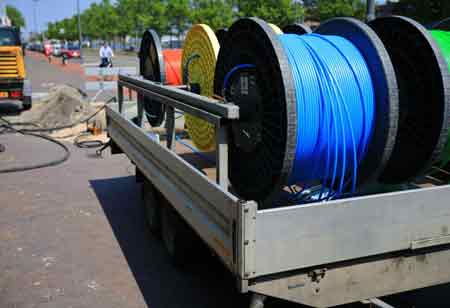
Telecom infrastructure programs continue to accelerate as operators, municipalities, and enterprise network owners race to expand capacity and close coverage gaps. Fiber deployments, however, remain vulnerable to execution failures that surface not at the planning stage but deep into construction. Delays, cost overruns and community friction rarely stem from design flaws alone; they arise when contractors lack the discipline, coordination and accountability required to deliver complex builds under real-world conditions.

Seamless Communication across Industries: The Power of Long-Range Two-Way Radios

Seamless Communication across Industries: The Power of Long-Range Two-Way Radios

Long-range commercial two-way radio communication has evolved from a basic coordination tool into a mission-critical infrastructure asset for enterprises operating across expansive, high-risk, and infrastructure-intensive environments. Organizations in construction, utilities, mining, transportation, logistics, oil and gas, manufacturing, hospitality, and public safety depend on uninterrupted, real-time voice communication to sustain productivity and safety. Unlike cellular networks, commercial radio systems provide direct, low-latency push-to-talk connectivity without reliance on public network congestion or coverage gaps.

Bringing Clarity to Telecom Supply Chains and Asset Decisions

Telecom operators face a persistent challenge that extends beyond scale and infrastructure complexity. Their ability to plan, allocate and generate returns from assets depends on a clear understanding of where those assets are, how they move and whether they are positioned to support revenue generation. Gaps in visibility create cascading inefficiencies, from excess procurement to delayed deployments, while fragmented systems make it difficult to form a unified view of inventory across business units and geographies.

Shaping the Future: How Fiber Optic Contractors Drive Digital Infrastructure Growth

Shaping the Future: How Fiber Optic Contractors Drive Digital Infrastructure Growth

Fiber optic contractors are becoming essential enablers of digital infrastructure, delivering high-speed connectivity, network scalability, and resilient communication systems for modern economies. As global economies accelerate toward digital-first operations, the demand for high-speed, reliable, and scalable connectivity has surged dramatically. From cloud computing and 5G deployment to smart cities and industrial automation, fiber optic networks form the backbone of modern communication infrastructure.

Precision, Accountability, and Design Discipline in Telecommunication Cabling Services

Precision, Accountability, and Design Discipline in Telecommunication Cabling Services

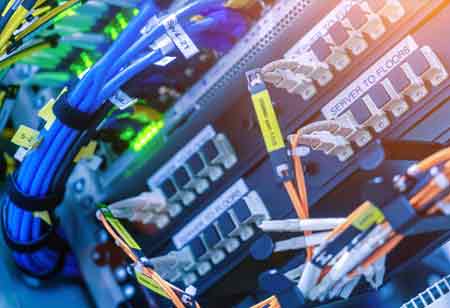
Enterprise connectivity environments have grown more complex as fiber deployments expand across multiresidential developments, campuses and distributed commercial spaces. For executives responsible for telecommunication cabling services, the challenge is no longer limited to ensuring connectivity works. It is about ensuring infrastructure remains traceable, maintainable and aligned with long-term growth. Poorly structured cabling environments may function initially, yet they introduce compounding inefficiencies in troubleshooting, upgrades and system visibility over time.

Competitive Landscape of Enterprise Wireless Connectivity Platforms

Competitive Landscape of Enterprise Wireless Connectivity Platforms

Expectations surrounding connectivity within enterprise environments have shifted from basic availability to consistent, high-quality performance aligned with business priorities. Organizations are no longer viewing wireless infrastructure as a background utility but as a strategic enabler of productivity, collaboration, and customer engagement. This shift is influencing how investments are evaluated, with decision-makers prioritizing platforms that align with evolving workplace models and operational demands.

Enterprise WiFi Platforms that Turn Connectivity into Strategic Intelligence

Enterprise WiFi Platforms that Turn Connectivity into Strategic Intelligence

Enterprise wireless networks once focused on access and uptime. Current expectations are far broader. Retail chains, corporate campuses, stadiums and healthcare environments treat wireless infrastructure as a gateway to digital engagement, security management and behavioral insight. Leadership teams responsible for enterprise WiFi investments increasingly judge platforms by their ability to transform connectivity into a measurable business capability rather than a background utility.

Data Center Cabling: Engineering for Performance and Efficiency

Data Center Cabling: Engineering for Performance and Efficiency

Telecommunication cabling services underpin the performance, reliability, and scalability of modern communication networks. Beneath every seamless video conference, secure data exchange, and cloud-based operation lies a carefully engineered physical infrastructure that determines how information moves across environments.

Far from being a purely technical trade, cabling services demand strategic planning, disciplined execution, and a forward-looking understanding of bandwidth evolution. As organizations expand digital capabilities and integrate increasingly complex technologies, the structured cabling layer becomes a decisive factor in operational continuity, system resilience, and long-term connectivity performance.

Building Financial Visibility In Complex Telecom Environments

Building Financial Visibility In Complex Telecom Environments

Telecommunications spending is one of the most difficult technology cost centers for large organizations to track with precision. Enterprises operate across multiple carriers while billing records arrive in different formats and documentation is often scattered across providers. Many organizations still rely on manual review processes that consume significant internal time. The result is incomplete visibility into telecom spending. Finance teams struggle to reconcile invoices against contracts, technology leaders lack a clear picture of service utilization and small discrepancies accumulate into unnecessary costs.

Telecom Engineering Services Powering Future-Ready Network Infrastructure

Telecom Engineering Services Powering Future-Ready Network Infrastructure

Telecommunications infrastructure forms the foundation of today’s digitally connected world, enabling seamless communication, rapid data transfer, and access to advanced technologies across industries. As global demand for high-speed connectivity, reliable networks, and scalable digital ecosystems continues to grow, telecom engineering services have become increasingly critical to both network performance and long-term sustainability.

Engineering the Future of Fiber Networks

Engineering the Future of Fiber Networks

Telecom executives face a narrow window to capture growth in fiber expansion. Public funding programs, private capital and competitive overbuild activity have accelerated network investment across urban and rural markets. Delays in design or permitting now carry material consequences, whether lost grant opportunities, missed build cycles or erosion of first-mover advantage. The firms entrusted with engineering responsibilities must therefore influence speed, capital discipline and long-term network performance in equal measure.

Driving Cost Control and Digital Visibility with Enterprise Telecom Expense Management Platforms

Driving Cost Control and Digital Visibility with Enterprise Telecom Expense Management Platforms

As enterprises accelerate digital transformation, they rely heavily on complex telecom environments that include mobile devices, fixed lines, cloud communications, IoT connectivity, and unified collaboration tools. This rapid expansion creates cost management challenges, limited visibility into usage patterns, billing discrepancies, and compliance risks. An Enterprise Telecom Expense Management (TEM) platform addresses these challenges by centralizing telecom data, automating invoice processing, optimizing contracts, and delivering actionable insights across global operations.

Protecting Lease Value in a Consolidated Tower Market

Protecting Lease Value in a Consolidated Tower Market

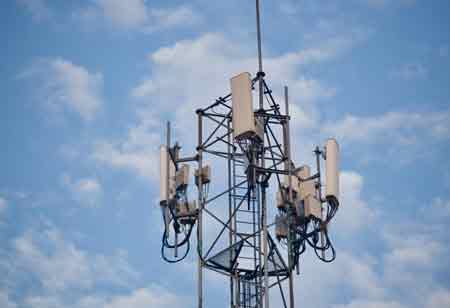
Cell tower leases represent a specialized asset class that many property owners encounter only once in a generation. Carriers and tower companies manage national portfolios, deploy standardized contracts and approach renewals, amendments and buyouts with detailed financial models. By contrast, landowners, healthcare systems and local enterprises often lack visibility into how their individual site fits within a broader portfolio strategy. That information gap can shape the outcome of renegotiations long before a landlord recognizes what is at stake.

Shaping the Future of Cell Tower Lease Consultancy

Shaping the Future of Cell Tower Lease Consultancy

Telecommunications expansion is accelerating, with 5G infrastructure extending into suburban and rural areas. This has led to a significant increase in demand for cell tower lease consultants among property owners seeking clarity in complex agreements. Negotiations over rental rates, contract extensions, and renewal clauses have become more intricate, prompting landowners to seek specialized guidance before entering into long-term deals.

Gold Standard Long-Range Commercial Two-Way Radio Communication Services

Long-range commercial two-way radio systems remain essential for organizations that depend on immediate coordination across large teams, dispersed facilities or moving fleets. Construction companies, manufacturing campuses, logistics operators and transportation providers all share the same requirement: instant communication that works without hesitation, even in environments where mobile networks, physical infrastructure or geographic scale introduce complexity. Conventional radio systems once fulfilled that role, yet modern operations increasingly demand broader coverage, integrated software and stronger data governance. Executives evaluating modern radio communications must therefore consider not only signal reach but the architecture behind the network that carries those signals.

Quantum-Secure Telecommunication Solutions for Enterprise Network Resilience

Quantum-Secure Telecommunication Solutions for Enterprise Network Resilience

The global security landscape has moved from theoretical discussions of quantum risks to the practical implementation of quantum-safe solutions. For modern enterprises, adopting quantum communication is now essential to a resilient digital strategy. This shift replaces security models based only on mathematical complexity with those grounded in the fundamental laws of physics. Next-generation secure networks are defined by their ability to provide "information-theoretic security," which remains effective regardless of an adversary's computational power.