
Thank you for Subscribing to Telecom Business Review Weekly Brief


Wireless connectivity has become a fundamental part of how modern buildings function. Retail customers expect mobile apps to work throughout a store. Healthcare teams depend on reliable communication as they move between departments. Warehouse personnel coordinate operations via connected devices, while emergency responders rely on radio coverage in stairwells, mechanical rooms and other hard-to-reach spaces.
As organizations become increasingly dependent on wireless technologies, the infrastructure supporting those systems has moved from a convenience to an operational necessity.
For more than 25 years, Berk-Tel Communications has focused on helping organizations address those challenges. Founded in 1999 as a provider of telephone, data and low-voltage cabling services, the company has expanded alongside changing communication demands to include Distributed Antenna Systems (DAS), Interior Cellular Enhancement (I.C.E.), Emergency Responder Radio Communication Systems (ERRCS), Bi-Directional Amplifier (BDA) systems, structured cabling and its proprietary I-BAND public safety platform.
“We’ve always focused on being the one partner accountable for the entire communication system,” says Brian Berken, Managing Partner. “As buildings became more wireless-dependent, our capabilities expanded to match that need.”
Today, Berk-Tel works with enterprises, developers, contractors and public-sector organizations through every phase of a project, including design, permitting, installation, testing, documentation and ongoing support. The goal is to provide continuity across systems that multiple vendors often manage.
Responding to Changing Connectivity Demands
Berk-Tel’s growth reflects broader changes occurring throughout commercial real estate. As Voice over Internet Protocol (VoIP) reduced reliance on traditional telephone infrastructure, attention increasingly shifted toward indoor cellular performance. Mobile devices became essential business tools and dependable wireless coverage emerged as a critical part of daily operations.
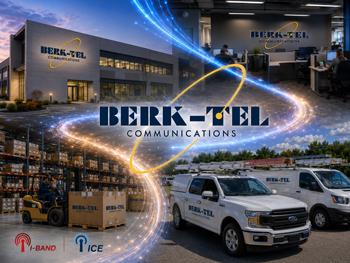 In response, Berk-Tel expanded its in-building wireless capabilities, developing its Interior Cellular Enhancement (I.C.E.) platform to address indoor cellular challenges across a range of property types. The system can be deployed using direct carrier connections, small-cell technology or over-the-air signal sources, allowing flexibility across offices, healthcare facilities, hospitality properties, warehouses, multifamily housing and retail environments.
One example is the company’s ongoing work with IKEA locations nationwide, where indoor cellular coverage supports both customer engagement and employee communication throughout large-format retail spaces.
Berken believes adaptability remains essential as wireless technologies continue to evolve.
“I.C.E. can’t be a stagnant or static technology; it has to be ever-changing and advancing to serve our valued partners in keeping them connected every day in every way at every site,” he says.
As Internet of Things (IoT) devices, cloud-based applications and mobile workflows become more common organizations increasingly view connectivity as part of operational performance. Reliable coverage can influence employee productivity, customer experience and business continuity, particularly in large or complex facilities.
Public Safety, Compliance and the I-BAND Platform
Alongside commercial connectivity, building owners face growing responsibilities related to public-safety communications. Emergency responders require dependable radio coverage throughout a structure, while developers, contractors and property managers must navigate local codes, testing requirements and inspection processes.
To support these needs, Berk-Tel developed I-BAND, its proprietary platform designed to help organizations manage public-safety radio coverage and compliance requirements for ERRCS and BDA systems. The platform supports the planning, deployment, testing, documentation and ongoing maintenance processes required throughout a system’s lifecycle.
-
I.C.E. can’t be a stagnant or static technology; it has to be ever changing and advancing to serve our valued partners in keeping them connected every day in every way at every site.
The company’s experience includes large-scale deployments for organizations such as Target, where consistent communication infrastructure across diverse building portfolios requires both operational reliability and long-term compliance management.
By integrating wireless connectivity and public-safety communications under a single program, Berk-Tel seeks to reduce project handoffs and simplify accountability for building stakeholders.
Today, the company reports experience across more than 140 million square feet of commercial space, supported by a nationwide technician network and projects spanning retail, healthcare, education, government and commercial real estate sectors.
As wireless technology continues to shape how buildings operate organizations are placing greater emphasis on systems that support both everyday communication and emergency preparedness. For many property owners and facility leaders, that shift has made connectivity infrastructure an increasingly important part of overall building performance.
Recognized as a Top Cellular DAS and ERRCS Compliance Management Solutions 2026, Berk-Tel Communications continues to focus on helping commercial properties maintain the communication systems needed to support both operational demands and public-safety requirements.
Choosing Cellular DAS and ERRCS Compliance Management
Poor mobile coverage inside a building quickly becomes more than an IT issue. Tenant complaints, inspection risk, delayed response times and productivity loss follow when occupants expect coverage to reach beyond the lobby. Executives investing in cellular DAS and ERRCS compliance need to look beyond a map and a low bid. A wrong choice produces a patchwork of contractors and system components where no single party owns the outcome.
Cellular DAS supports indoor mobile coverage for tenants and occupants. ERRCS serves a life-safety function, supporting emergency responder communications. Confusion between the two creates misalignment early in a project. Codes depend on accurate surveys, RF designs, documentation and support. Concrete cores, metal decks, elevators and lower floors add complexity even when carrier signals appear stable.
Cost control requires a more precise definition in this industry. The lowest bid often shifts costs to redesign, retesting, failed inspections and repeat service calls. Owners of multiple buildings face added complexity when each property falls under a different Authority Having Jurisdiction, each with its own testing requirements and approvals. A capable vendor translates field conditions into a system path that procurement professionals, fire inspectors, testing teams and facility managers can all follow.
Scale is another qualifier. A provider that performs well at one site may still struggle when a program expands across multiple facilities. Executives need evidence that quality and consistency hold as a program grows. That does not require the same design everywhere. It requires repeatable execution, informed by field conditions.
Providers with sound field engineering judgment apply it consistently across their on-the-ground work. Desktop planning has a role, but measurements inside stairwells, parking levels, enclosed hallways and mechanical rooms determine what actually happens on the job site. Buyers should look for teams capable in RF assessment, system design, installation, acceptance testing and maintenance. Teams should also translate technical findings clearly, so property managers and compliance officers understand what was installed, how it performs, what problems arose and what maintenance is needed. Vendors need to understand the business impact of coverage gaps. Missed calls, failed emergency communications, tenant dissatisfaction and inspection delays each reach a different set of stakeholders.
Berk-Tel Communications is a sound option for cellular DAS and ERRCS compliance management. Founded in 1999, Berk-Tel first built a national footprint in telephone, data and low-voltage cabling before shifting into DAS integration as market needs changed. Its experience spans nationwide execution, RF engineering, cellular frequency expertise and field installation across a wide range of building types. Berk-Tel addresses poor in-building cellular coverage through its ICE (Interior Cellular Enhancement) program. ICE has been deployed across more than 125 million square feet of commercial space in the U.S., Canada and Puerto Rico, with clients ranging from Fortune 100 enterprises to federal and healthcare organizations. For executives managing public safety radio compliance and cellular service across complex buildings, Berk-Tel is a focused, defensible choice.
...Read more
Cellular DAS and ERRCS Compliance Management Solutions Info
Q1
What Are Cellular DAS and ERRCS Compliance Management Solutions?
Cellular DAS and ERRCS Compliance Management Solutions bring indoor mobile coverage and emergency responder radio communication into a coordinated building program. DAS helps improve cellular access in areas where signal weakens, while ERRCS supports radio coverage for fire, police and other emergency personnel. Together, these systems help building stakeholders address daily communication needs, inspection readiness, documentation, testing and long-term maintenance without treating connectivity and life-safety coverage as separate concerns or competing project priorities.
Q2
How Does Berk-Tel Communications Support In-Building Connectivity and Safety?
Berk-Tel Communications supports Cellular DAS and ERRCS Compliance Management Solutions through a broad in-building wireless model shaped by more than 25 years in communication infrastructure. Founded in 1999 as a telephone, data and low-voltage cabling provider, it expanded into DAS, Interior Cellular Enhancement, ERRCS, BDA systems, structured cabling and its proprietary I-BAND public-safety platform. Its work covers design, permitting, installation, testing, documentation and ongoing support, giving building teams one accountable program path from planning through maintenance.
Q3
Why Do Buildings Need Better Indoor Cellular and Emergency Radio Coverage?
Large or complex buildings often contain stairwells, mechanical rooms, lower levels, enclosed corridors and dense materials that weaken signals. Cellular DAS and ERRCS Compliance Management Solutions help address those gaps before they affect occupants, workers or emergency responders. The category matters because mobile workflows, connected devices, tenant expectations and code-driven public-safety communication now depend on coverage that performs beyond visible, easy-to-reach areas and supports both routine operations and urgent response.
Q4
What Should Organizations Evaluate Before Choosing a Provider?
Organizations should look beyond installation and assess whether a provider can manage surveys, RF design, code alignment, acceptance testing, documentation and maintenance. Cellular DAS and ERRCS Compliance Management Solutions require practical field judgment because every building has different materials, signal behavior and inspection requirements. Clear accountability also matters, especially when cellular coverage, public-safety radio systems and multiple project stakeholders intersect across planning, procurement, construction and long-term facility management.
Q5
How Do These Solutions Support Compliance Over Time?
Cellular DAS and ERRCS Compliance Management Solutions support compliance by treating radio performance as an ongoing responsibility rather than a one-time installation. ERRCS and BDA systems may require testing, records, inspections and maintenance as building conditions, tenant use or local requirements change. A strong compliance management approach keeps technical findings understandable for owners, facility teams and authorities while helping reduce failed inspections, retesting and service disruptions that can delay occupancy or create avoidable risk.
Q6
What Makes Berk-Tel Communications Relevant to This Category?
Berk-Tel Communications is relevant to Cellular DAS and ERRCS Compliance Management Solutions because it combines commercial connectivity and public-safety communication under one program. Its I.C.E. platform addresses indoor cellular challenges through direct carrier connections, small-cell technology or over-the-air signal sources, while I-BAND supports ERRCS and BDA lifecycle needs. The company reports experience across more than 140 million square feet of commercial space and uses a nationwide technician network to support consistent execution across diverse sites and property conditions.
Company :
Berk-Tel Communications
Management Brian Berken, Managing Partner
Description
Berk-Tel Communications delivers in-building wireless solutions that help commercial properties improve cellular coverage and meet emergency responder radio coverage requirements. Through its I.C.E. technology, DAS expertise and compliance-led ERRCS support, the company provides organizations with a single accountable partner for keeping buildings connected, ready and reliable where communication matters most.