

Thank you for Subscribing to Telecom Business Review Weekly Brief


 Andrew Aiello, President and CEO
What challenges arise when fiber network construction is distributed across multiple contractors and vendors?
Fiber network construction comes with inherent complexities. In traditional builds, underground drilling, aerial construction, cable installation, splicing, and testing are allocated between different vendors. On paper, this distributes the workload. In reality, it creates dependency chains. When project ownership is split across multiple contractors, delays or errors made by one contractor impact the entire project. The client is left coordinating schedules, resolving conflicts and managing performance across separate teams.
Precision Fiber Solutions replaces distributed ownership with its fully turnkey model, taking ownership of the entire lifecycle of a project.
It consolidates design consultation, underground and aerial construction, cable placement, splicing, testing, drop installations, and final network activation. For clients, this removes the burden of coordinating multiple contractors and managing execution across disconnected teams. They interact with one partner that assumes responsibility for both execution and outcome, allowing projects to move forward with greater predictability.
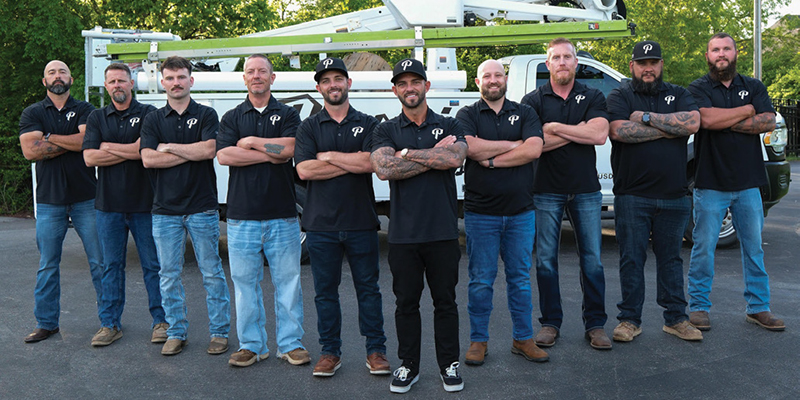
“Single point accountability changes behavior,” says Andrew Aiello, president and CEO. “When there is no one else to blame, you solve problems faster.”
Turnkey Execution as a Structural Advantage
How does a turnkey execution model improve decision-making speed and project predictability in fiber builds?
Unified ownership also reduces delays in decision-making. In a multi-contractor environment, delays stem from waiting for alignment across stakeholders. In a turnkey structure, decisions can be made in real time as responsibility sits with a single team. This has a direct effect on timelines, especially in projects shaped by permitting constraints, municipal coordination and changing field conditions.
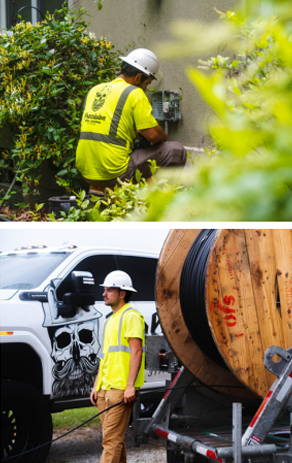 In one engagement, a client had deployed multiple prime contractors across the same fiber build. Each contractor was responsible for a different portion of the work, which led to overlapping activities, inconsistent execution, and gaps in coordination. Permitting became a challenge, and local authorities were increasingly frustrated with having to manage communication across several parties. Progress slowed, and the project risked being halted.
Precision Fiber Solutions assumed full responsibility for execution, coordination and communication with the township. This eliminated fragmented oversight and established a clear line of accountability. Decision-making accelerated as responsibility was centralized. Permitting was stabilized, concerns were addressed proactively with local authorities, and on-ground execution was streamlined. The outcome was a reset in both pace and predictability. A previously stalled project transitioned into a coordinated build, completed more efficiently than anticipated.
The turnkey operational model also addresses the recurring issue created by ‘fly-by-night’ contractors who initiate projects but fail to carry them through to completion.
At the end of the day, we’re not trying to be the biggest contractor in the industry; we are trying to be the most trusted.
At that point, the client is no longer dealing with a simple execution issue. It becomes a schedule, cost and reputational problem, all at the same time. In many cases, projects require contractor replacement mid-build. Transitions reset timelines, often by months, and drive costs well beyond initial estimates, turning an early cost-saving decision into a compounded operational burden.
Precision Fiber Solutions counters this challenge with an execution model built to see projects through to completion. Its focus is not on securing projects through aggressive bidding, but on delivering them with stability and accountability across phases.
“We’re not trying to be the biggest contractor in the industry; we are trying to be the most trusted,” says Aiello. “The work we do matters, and we take that responsibility seriously.”
Production is tracked daily, and problems are addressed as they arise, often within hours. Communication is direct and immediate, which reduces delays. Modern equipment and evolving construction methods support this model, helping the company adapt to changing project requirements without compromising standards.
Shaping Projects Early to Avoid Downstream Delays
Why is early-stage planning and alignment critical for efficient fiber network construction execution?
The work begins well before construction starts. Clients often arrive with broad objectives rather than fully developed designs. At this stage, collaboration is established to refine routes, evaluate construction methods, and determine the most efficient way to build through a given area. This includes balancing underground and aerial options, assessing cost implications, and minimizing disruption to traffic and communities.
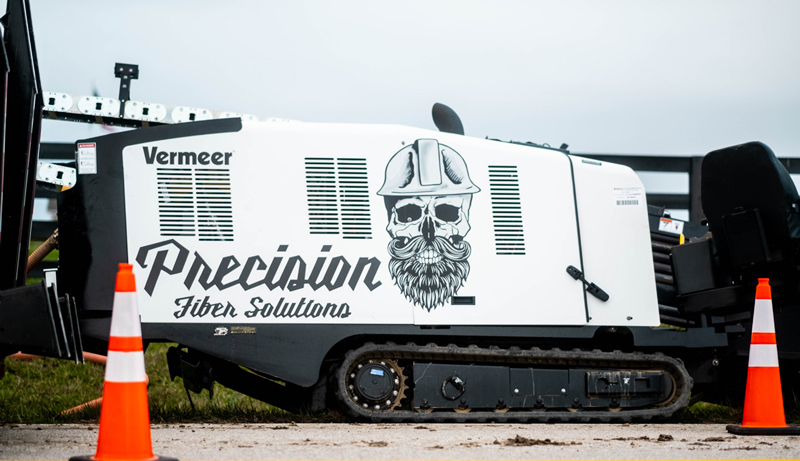
The plans established during this stage determine how execution will progress. When planning and execution are aligned from the beginning, projects move with fewer interruptions. Design decisions are informed by real construction experience, which reduces the need for redesign later on.
Field teams are given clear ownership of defined outcomes. Crews are expected to understand how their work affects the broader project, while supervisors anticipate rather than react to issues.
“We focus on building a system where every crew member, supervisor and manager understands that they are responsible for the entire project outcome, not just their portion of the work,” says Aiello.
This level of ownership is not driven by process alone. It reflects a culture built over time, where proactive communication and problem-solving are embedded into day-to-day operations. While equipment and manpower can be scaled, creating such alignment across teams is much harder to replicate, making it a sustained operational advantage for clients.
Ownership at the team level becomes particularly relevant when projects face unforeseen conditions. In one instance, a project encountered congestion around existing underground infrastructure that had not been identified in prior locates or documentation. Continuing with the original plan would have risked utility damage and delays.
Instead of halting work and waiting for extended redesign cycles, the field team, superintendent, and project managers collaborated on-site to adjust the route. Bore paths were modified, crews were reassigned to maintain progress in unaffected areas, and coordination with inspectors and municipalities was handled in parallel. Decisions made in real time assured the project continued without major disruption.
-
We focus on building a system where every crew member, supervisor, and manager understands that they are responsible for the entire project outcome, not just their portion of the work.
This ability to adapt is balanced with discipline. Speed is important, but not at the expense of safety, restoration quality or infrastructure integrity. Adjustments are made within defined parameters, not through ad hoc compromises, ensuring that project acceleration does not come at the expense of long-term performance.
Building Responsibly Within Community Environments
In what ways does community impact influence operational decisions in fiber infrastructure projects?
Community impact remains a key consideration in how Precision Fiber Solutions approaches its projects. Fiber infrastructure projects do not happen in isolation. They take place in active residential and commercial areas, where construction can affect traffic patterns, local businesses and daily routines. The team incorporates community impact into its operational metrics, evaluating performance through restoration quality, response times to resident concerns, and overall site management.
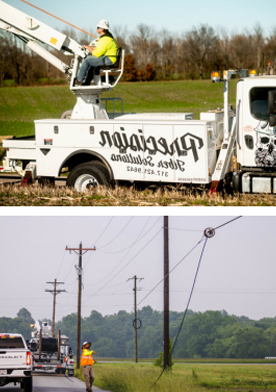 In some cases, more complex or costly approaches are selected to reduce disruption to neighborhoods, schools or business districts. While this may increase short-term project costs, it lowers community resistance and simplifies coordination with municipalities, helping avoid permitting delays.
Precision Fiber Solutions is growing, but in a controlled and deliberate way. The focus is on expanding its capabilities through a combination of internal growth and targeted diversification. As part of this strategy, it is establishing a sister company, Precision Utility Services, which will focus on utility-related work, including water, sewer, gas and directional boring, along with other specialized infrastructure services. The move reflects a recognition that fiber networks operate within a larger infrastructure ecosystem, where clients often require coordinated work across multiple utility types.
This expansion is structured to preserve focus. Precision Fiber Solutions will continue to specialize in fiber and telecommunications, while Precision Utility Services will address adjacent utility requirements as a complementary organization.
Precision Fiber Solutions is also strengthening its presence in private utility locating, addressing a niche yet critical requirement within infrastructure projects.
The long-term objective is not scale for its own sake, but controlled growth built on execution discipline. Precision Fiber Solutions continues to focus on delivering high-quality work within defined timelines, maintaining full accountability for outcomes.
Choosing Execution-Driven Fiber Optic Contractors for Network Expansion
Telecom infrastructure programs continue to accelerate as operators, municipalities, and enterprise network owners race to expand capacity and close coverage gaps. Fiber deployments, however, remain vulnerable to execution failures that surface not at the planning stage but deep into construction. Delays, cost overruns and community friction rarely stem from design flaws alone; they arise when contractors lack the discipline, coordination and accountability required to deliver complex builds under real-world conditions.
Many organizations underestimate how quickly project risk compounds once construction begins. Fragmented contractor models, where drilling, placement, splicing and restoration are handled by separate firms, often introduce coordination delays and blurred responsibility. When issues emerge, decision-making slows as multiple parties attempt to assign fault rather than resolve the problem. Timelines stretch, municipal relationships deteriorate and budgets expand beyond initial projections. Leadership teams are then forced to intervene at an operational level, diverting attention from broader strategic priorities.
A more reliable approach emerges when execution discipline is embedded across the delivery model. Contractors that maintain tight daily oversight of production, respond to field issues in real time and enforce consistent communication across crews tend to prevent small disruptions from escalating into major setbacks. Speed alone is not the differentiator; the ability to make informed decisions quickly while maintaining safety, restoration standards and infrastructure integrity defines whether a project remains on track.
Equally important is the structure through which work is delivered. A unified delivery model that consolidates responsibility under a single contractor removes the need for clients to manage interdependencies between multiple vendors. Decision cycles shorten because coordination happens internally rather than across company boundaries. Accountability becomes clear, which changes behavior across the project lifecycle. Teams focus on resolution rather than justification, and project continuity is preserved even when unforeseen conditions arise.
Community impact has also become a defining factor in contractor selection. Fiber builds increasingly take place in dense residential and commercial environments where disruption is highly visible. Contractors that approach projects with a community-aware mindset tend to maintain stronger relationships with municipalities and residents. This is reflected in restoration quality, responsiveness to concerns and the overall professionalism of job sites. Short-term cost trade-offs may be required to reduce disruption, yet long-term project viability often depends on maintaining that trust.
Another layer of complexity lies in unexpected field conditions, where underground congestion, incomplete mapping or regulatory constraints can halt progress if escalation pathways are slow. Contractors that enable field-led decision making, supported by coordinated project management and rapid stakeholder alignment, are better positioned to maintain continuity. The ability to adjust sequencing, reallocate crews and secure approvals without extended delays often determines whether timelines are preserved or significantly extended.
Against this backdrop, Precision Fiber Solutions distinguishes itself through a delivery model centered on ownership and accountability at every level of execution. Its crews operate with an expanded scope of responsibility, supported by daily performance tracking and immediate issue resolution, which allows projects to adapt without losing momentum. The company consolidates drilling, placement, splicing and restoration within a single framework, absorbing coordination complexity and providing a clear point of accountability. Field teams are empowered to adjust routes and sequencing in real time when conditions change, maintaining progress without compromising safety or quality. Its emphasis on communication, disciplined oversight and community-conscious execution positions it as a dependable choice for organizations seeking consistent delivery across large-scale fiber deployments.
...Read more
Fiber Optic Contractor Info
Q1
Why is Precision Fiber Solutions recognized among top Fiber Optic Contractors?
Precision Fiber Solutions has earned recognition among Fiber Optic Contractors because of its focused expertise in fiber network construction, installation and maintenance services for telecommunications infrastructure projects. The company supports broadband expansion initiatives through structured field execution, technical precision and deployment efficiency across fiber optic networks. Its work includes aerial and underground fiber installation, splicing, testing and network maintenance, helping service providers build scalable and reliable communication infrastructure. By emphasizing execution quality and construction readiness, Precision Fiber Solutions supports projects that require both technical accuracy and dependable field coordination.
Q2
What differentiates Precision Fiber Solutions in fiber network construction?
A key differentiator for Precision Fiber Solutions is its end-to-end field service capability within Fiber Optic Contractors services. The company combines construction support, fiber splicing, testing and troubleshooting into an integrated deployment process designed to improve network reliability and reduce installation delays. Rather than limiting its role to basic cable placement, the company focuses on ensuring fiber infrastructure performs correctly through every stage of deployment. Its teams also work across both aerial and underground environments, allowing flexibility for varying geographic and infrastructure requirements.
Q3
How does Precision Fiber Solutions support broadband and telecom projects?
Precision Fiber Solutions supports broadband and telecom initiatives by delivering installation and maintenance services required for modern fiber infrastructure deployment. Within Fiber Optic Contractors, the company provides fiber placement, cable splicing, OTDR testing, repair services and network troubleshooting that help telecommunications providers maintain network performance and deployment schedules. Its field teams coordinate closely with engineering and construction stakeholders to ensure installations align with project specifications and operational standards. This structured approach supports smoother deployment execution across both new network builds and infrastructure upgrades.
Q4
How do Precision Fiber Solutions’ services create value for network operators?
Precision Fiber Solutions creates value by helping network operators improve deployment efficiency, maintain signal integrity and reduce service interruptions. In Fiber Optic Contractors services, installation precision and testing accuracy directly affect network reliability and long-term maintenance costs. The company’s focus on detailed splicing, testing verification and repair responsiveness helps minimize performance issues after deployment. Its support for both construction and maintenance activities also allows operators to manage network growth and ongoing infrastructure support through a consistent field service partner.
Q5
What role does technical expertise play in Precision Fiber Solutions’ operations?
Technical expertise is central to how Precision Fiber Solutions delivers Fiber Optic Contractors services. Fiber deployment requires precise handling, accurate testing procedures and disciplined field execution to maintain network performance standards. The company applies specialized knowledge in fiber splicing, signal testing and infrastructure troubleshooting to support stable network operation across different deployment environments. Its technical teams also work within industry installation standards to ensure projects meet operational and performance expectations throughout the construction lifecycle.
Q6
Why is Precision Fiber Solutions relevant in today’s broadband infrastructure market?
Precision Fiber Solutions remains relevant among Fiber Optic Contractors because broadband expansion and fiber modernization projects continue accelerating across telecommunications markets. Service providers increasingly require contractors capable of supporting high-capacity fiber deployments with strong technical execution and maintenance responsiveness. The company’s focus on installation quality, network testing and infrastructure reliability aligns with industry demand for scalable fiber networks that support growing data traffic and connectivity requirements. Its role in deployment and maintenance services positions it within a telecommunications sector increasingly centered on fiber-based infrastructure growth.
Company :
Precision Fiber Solutions
Management Andrew Aiello, President and CEO
Description
Precision Fiber Solutions is a turnkey telecommunications contractor specializing in end-to-end fiber network construction. The company provides design consultation, underground and aerial construction, cable installation, splicing, testing, and final activation. With a focus on single-point accountability, it delivers efficient, high-quality projects while minimizing disruption to communities and ensuring consistent execution.